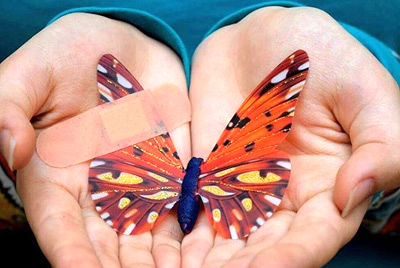
Butterfly disease is the common name for a rare genetic disorder called Epidermolysis Bullosa (EB). In this condition, the skin becomes extremely fragile due to defects in the proteins that anchor the layers of the skin together. Even minor friction or trauma can cause blisters and wounds. For this reason, affected individuals are sometimes referred to as “butterfly children.”
Origin and History:
The first descriptions of EB date back to the late 19th century.
With advances in molecular genetics in the 20th century, it became clear that the disease is caused by mutations in genes responsible for structural skin proteins (such as collagens and keratins).
Today, EB is recognized as an inherited disorder that can be transmitted in either an autosomal dominant or autosomal recessive pattern.
Signs and Symptoms:
The severity of symptoms varies depending on the type of EB, but the main features include:
Blistering of the skin caused by mild contact or friction
Chronic, slow-healing wounds
Difficulty swallowing and involvement of mucous membranes (mouth, esophagus)
Loss of nails or nail deformities
Fusion of fingers and toes in severe types
Anemia and malnutrition in advanced cases
Increased risk of skin cancer in certain severe types
Causes and Risk Factors:
Main Cause:
Genetic mutations in genes responsible for producing proteins that connect the layers of the skin (such as keratin 5 and 14, type VII collagen, etc.).
Risk Factors:
Consanguineous marriages (in recessive types)
Having parents who are carriers of the defective gene
Not contagious and cannot be transmitted through contact
Main Types of the Disease:
✅Simplex – Milder form, limited to the outer layer of the skin
✅Junctional – Involves the
✅middle layer of the skin
✅Dystrophic – Deeper and more severe involvement
✅Rare acquired (non-genetic) type
Diagnostic Methods:
▪️Specialized clinical skin examination
▪️Skin biopsy
▪️Electron microscopy evaluation
▪️Genetic testing to identify mutations
▪️Prenatal diagnosis in high-risk families
Treatment Methods:
Currently, there is no definitive cure for EB. Treatments focus on symptom control and prevention of complications:
*Supportive care
*Specialized non-adhesive dressings
*Infection prevention (antibiotics if needed)
*Proper nutrition and iron/vitamin supplementation
*Pain management
Advanced (Research or Limited) Treatments:
▪️Skin grafting
▪️Cell therapy and gene therapy
▪️Medications that enhance tissue repair
Prevention of Butterfly Disease (EB)
Butterfly disease, or Epidermolysis Bullosa (EB), is a hereditary genetic disorder.
Therefore, unlike infectious diseases, “prevention” does not mean preventing the condition after birth.
Prevention mainly focuses on genetic measures before birth.
1. Genetic Prevention (Most Important Strategy)
✅Genetic counseling before marriage or pregnancy
If there is a family history of EB
In consanguineous marriages
If one parent is a gene carrier
Genetic counseling can determine the risk of transmission.
✅Pre-pregnancy genetic testing
Identifying carrier status
Determining the specific gene mutation
✅Prenatal Diagnosis (for high-risk families)
✔️Chorionic villus sampling (CVS) in early weeks
✔️Amniocentesis in the second trimester
✔️Fetal DNA testing to detect EB
In Vitro Fertilization with
✅Preimplantation Genetic Diagnosis (PGD)
In IVF procedures, healthy embryos can be selected and transferred.
2. Preventing Symptom Worsening in Affected Individuals
If a child with EB is born, severe damage can be minimized through proper care.
Daily Care Measures:
▪️Wearing soft cotton clothing
▪️Avoiding friction and pressure
▪️Keeping nails trimmed short
▪️Using non-adhesive dressings
▪️Bathing with lukewarm water and mild cleansers
▪️Avoiding excessive heat (sweating increases blistering)
3. Family Education
▪️Learning proper dressing techniques
▪️Preventing infections
▪️Ensuring appropriate nutritional care
▪️Regular medical follow-up
Naturopathy in Epidermolysis Bullosa (EB)
Epidermolysis Bullosa (EB) is a genetic disease, and there is no natural or herbal cure that can correct the defective gene.
Naturopathy may only be used as a complementary approach alongside medical treatment to help reduce symptoms, improve wound healing, and strengthen overall health — not as a replacement for specialized dermatological care.
1. Nutritional Therapy (Core of the Natural Approach)
Due to chronic wounds and ongoing inflammation, patients with EB have higher nutritional requirements.
Important nutrients:
*High protein intake → for skin repair (eggs, soft meats, pureed legumes)
*Vitamin C → collagen production
*Zinc → wound healing
*Iron → prevention of anemia
*Vitamins A and E → skin health
*Omega-3 fatty acids → reduction of inflammation
If the esophagus is involved, food should be soft, pureed, or liquid.
2. Natural Topical Treatments (With Great Caution)
Some natural substances that may help support healing include:
.Pure sterile aloe vera → soothing anti-inflammatory effect
.Sterile medical-grade honey (such as Manuka) → antibacterial properties
.Calendula ointment → supports superficial skin repair
.Virgin coconut oil → gentle moisturizer
Each product must:
*Be completely sterile
Be tested first on a small area
Be used only with a physician’s approval
Not be applied to deep wounds without medical consultation*
3. Common Supplements in Naturopathy
✅Oral zinc
✅Vitamin C
✅Vitamin D
✅Probiotics (for gut health and improved nutrient absorption)
Supplements should be taken under medical supervision, as high doses may cause complications.
4. Reducing Inflammation and Supporting the Immune System
*Anti-inflammatory diet (reducing sugar and processed foods)
*Adequate hydration
*Regular sleep
*Stress management (meditation, deep breathing)
5. What Is NOT Recommended?
❌Using unknown oils or herbs on open wounds
❌Self-treating with strong herbal antiseptics
❌Discontinuing specialized medical dressings
❌Believing advertisements claiming a “definitive herbal cure”
Very Important Note
Butterfly disease (EB) is a structural genetic disorder.
Naturopathy can only:
✔️Help reduce inflammation
✔️Improve nutritional status
✔️Support the healing process
It cannot correct the underlying genetic defect.
Zeinab Gohari (Student of Naturopathic Medicine, TITU International University, Van Branch, Turkey)